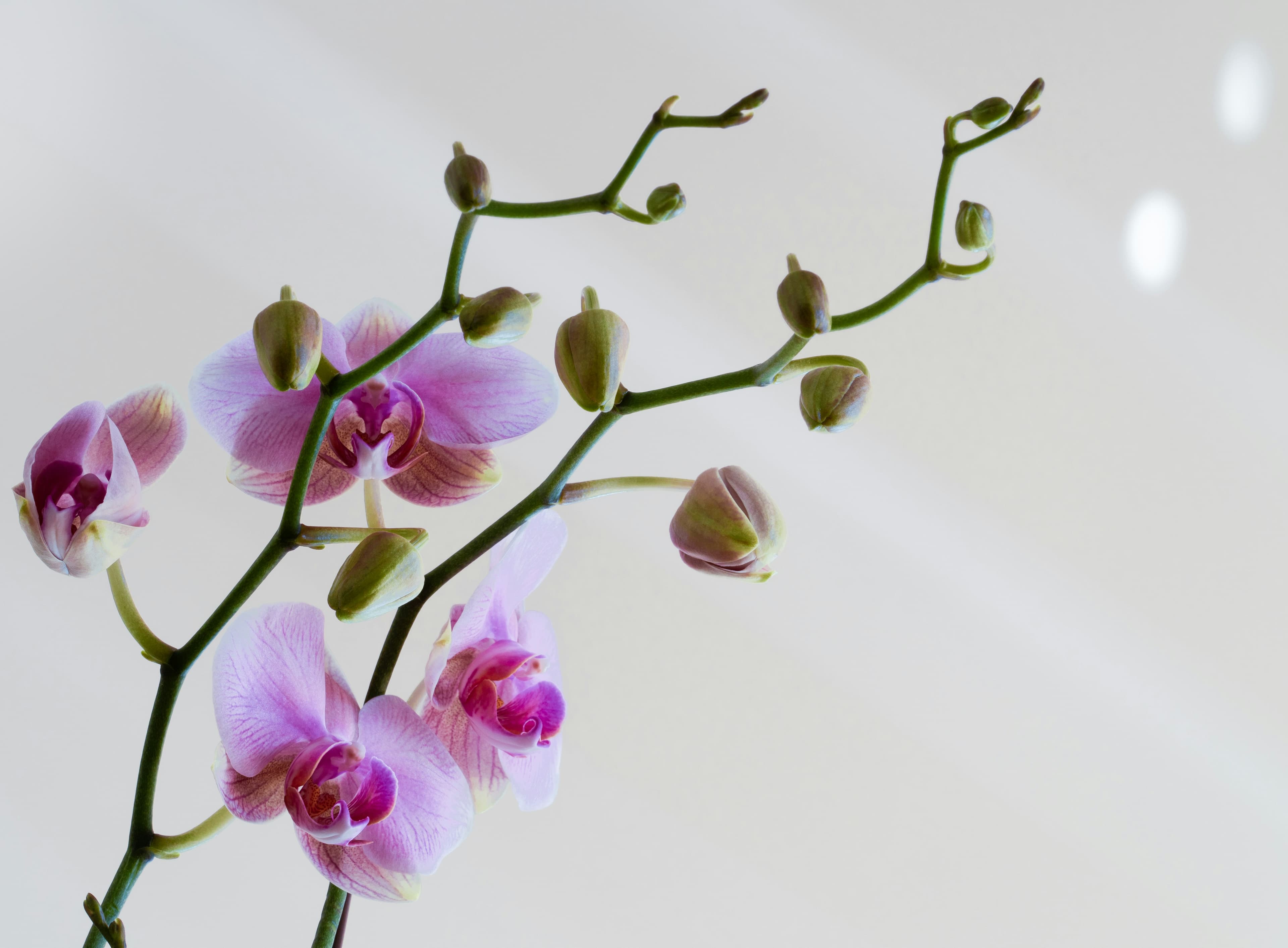
Your orchid's leaves are yellowing, or going limp, or the roots look brown and mushy — and you're not sure if it's dying or just struggling. Here's the honest answer: most orchids that look dead can be saved. But the fix depends entirely on which problem you have, and the wrong treatment makes things worse.
This guide covers the 6 most common reasons orchids decline, how to identify which one you're dealing with, and exactly what to do.
How to tell what's wrong — symptoms guide
Before doing anything, look at your orchid and match your symptoms to the list below.
Yellow leaves + soggy soil + brown mushy roots = overwatering / root rot (most common)
Yellow leaves + dry soil + white/tan dry roots = underwatering
Limp, wrinkled leaves + dry roots despite watering = root damage (can't absorb water)
Brown leaf tips + dry air = low humidity or central heating damage
Sticky residue on leaves + tiny insects = pests (scale, mealybug, or aphids)
Leaves fine, no flowers for 12+ months = needs a temperature drop to trigger blooming
Problem 1 — Root rot (overwatering)
Root rot is the most common orchid killer. It happens when the roots sit in moisture for too long — usually because the bark has broken down and become compost-like, or because the pot has no drainage.
What you'll see: Brown or black mushy roots when you remove the plant from its pot. Yellow leaves starting from the bottom of the plant. Soil that stays wet for more than 10 days.
How to fix it:
- Remove the orchid from its pot. If the roots are packed in, tip it sideways rather than pulling by the stem.
- Inspect every root. Healthy roots are white to light green and firm when you squeeze them. Rotten roots are brown, black, or grey and feel soft or hollow.
- Cut all rotten roots off with sterile scissors — sterilise with rubbing alcohol between cuts so you don't spread the rot.
- Let the remaining roots air-dry for 30 minutes.
- Repot into fresh orchid bark — not standard compost, which retains too much water. Use a clear plastic pot so you can see root health without disturbing the plant.
- Don't water for 5–7 days after repotting. The roots need time to settle.
- Move the plant away from any radiators or heat sources.
Ongoing care after root rot: Water every 8–10 days. Before watering, press a finger 2cm into the bark — if it still feels cool or damp, wait. The bark should feel almost completely dry before you water again.
Problem 2 — Underwatering
Less common than overwatering but still happens, especially with orchids in terracotta pots in heated rooms.
What you'll see: Leaves look yellow or slightly translucent. Roots are silvery-white and completely dry, possibly shrivelled. The bark feels bone dry and may have pulled away from the pot edges.
How to fix it:
- Give the orchid a deep drink — place the pot in a bowl of lukewarm water for 20 minutes so the roots can absorb moisture fully.
- Drain completely before returning to its saucer.
- Going forward, water every 7 days in summer and 10 days in winter.
Problem 3 — Root damage (can't absorb water)
This is a subtle one. The plant looks dehydrated — limp, wrinkled leaves — even though you're watering regularly. The issue is that the roots are damaged and can't transport water to the leaves.
Causes: Previous root rot treatment where too many healthy roots were removed. Roots that dried out completely and became dehydrated themselves. Very old orchid bark that has become compacted.
How to fix it:
Repot the orchid into fresh bark. Before repotting, rehydrate the roots by soaking in lukewarm water for 15 minutes. The plant may take 4–6 weeks to recover fully.
Problem 4 — Low humidity / central heating damage
Orchids need 50–70% humidity. UK homes in winter, with central heating running, often drop to 30–40%.
What you'll see: Brown, crispy tips on otherwise healthy leaves. Flower buds dropping before they open (called bud blast). No other symptoms.
How to fix it:
- Place the pot on a tray of pebbles with water beneath — the evaporation raises local humidity without waterlogging the roots.
- Group plants together — they create their own microclimate.
- Move away from radiators, which create dry air directly around the plant.
- A small room humidifier near your plants genuinely works.
Problem 5 — Pests
Orchids are vulnerable to scale insects, mealybugs, and occasionally spider mites.
Scale insects: Brown or tan oval bumps on stems and the undersides of leaves. They look almost like part of the plant. Sticky residue (honeydew) on leaves and surrounding surfaces.
Mealybugs: White fluffy cotton-like clusters in leaf joints and where leaves meet the stem.
Spider mites: Fine webbing on leaves, tiny moving dots visible with a magnifying glass. Usually appears in hot, dry conditions.
How to fix it:
For scale and mealybug: wipe off with a cotton swab dipped in rubbing alcohol. Repeat every 3 days for 2 weeks. For severe infestations, use a neem oil spray applied to all leaf surfaces.
For spider mites: increase humidity immediately, wipe leaves with a damp cloth, apply neem oil spray.
Isolate the affected plant from your other plants during treatment.
Problem 6 — Won't flower
This isn't really a problem — it's the plant working as designed. Phalaenopsis orchids need a temperature drop of around 5–8°C between day and night to trigger flower spike formation.
How to encourage flowering:
In autumn, move your orchid somewhere slightly cooler at night — near a window (but not cold enough to see your breath). Maintain this for 4–6 weeks. You should see a green spike emerging from the base of a leaf. Once the spike appears, return it to its normal position and it will flower within 8–12 weeks.
When to give up
Honestly? Only when the crown — the centre growing point of the plant — is completely rotted. If the crown is firm and green, there's always hope. Even orchids with no roots left can sometimes be saved by placing them in a humid environment (a clear bag over the plant) and waiting for new root growth. It takes months, but it works.
Get a diagnosis in seconds
Not sure which problem your orchid has? Take a photo with the PlantMedic app and get an instant AI diagnosis — confidence score, severity rating, and a specific rescue plan for your plant.