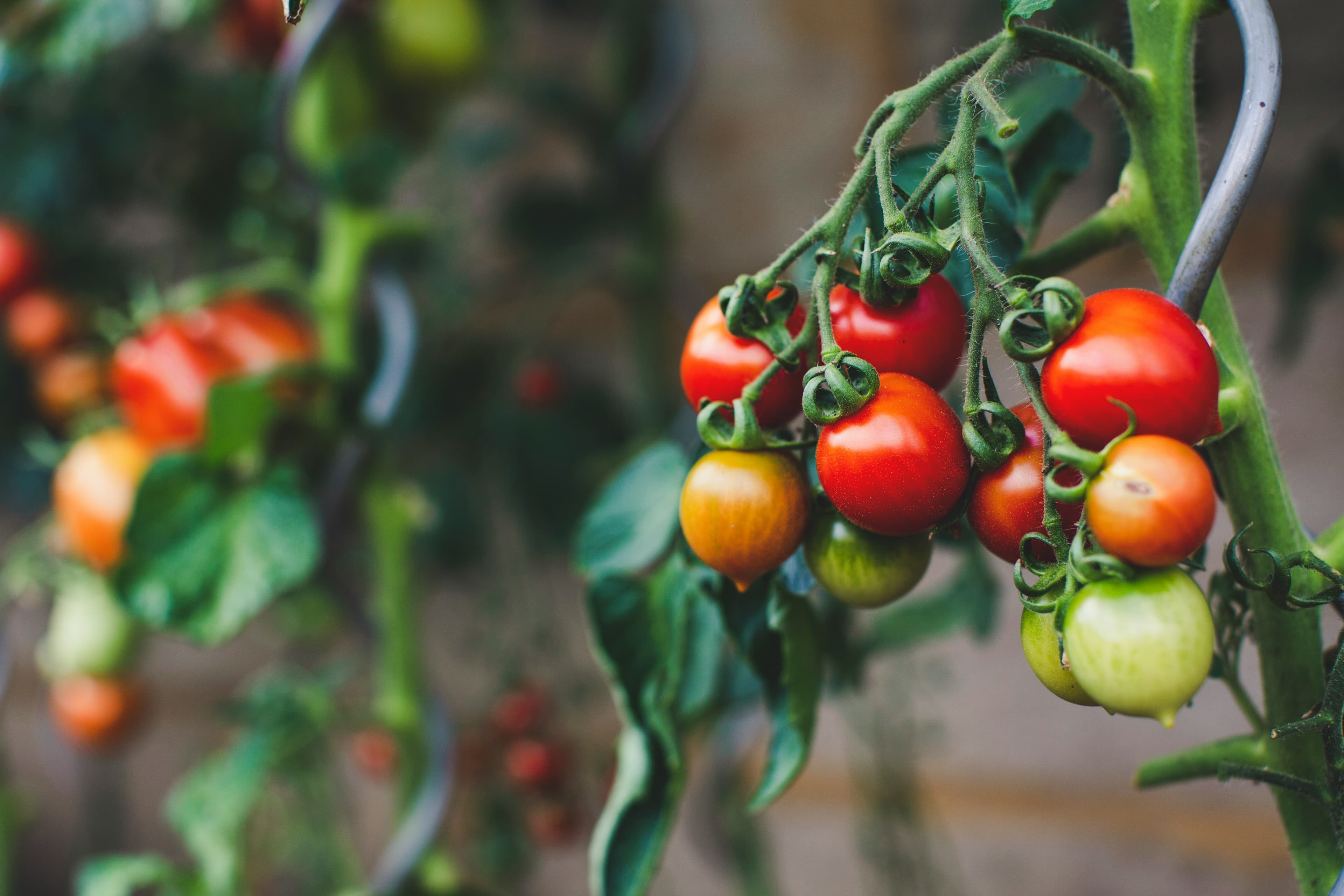
Tomato plants are dramatic. They show symptoms quickly and the range of things that can go wrong is wide. The good news is that most problems are identifiable from the visual symptoms and most are fixable if you catch them early.
This guide covers the 8 most common tomato plant problems in UK gardens and greenhouses — what they look like, what causes them, and exactly what to do.
Quick symptom checker
Brown patches on leaves + dark sunken patches on fruit = blight (late or early)
Black sunken patch on the bottom of the fruit = blossom end rot
Leaves curling upward, plant otherwise healthy = physiological leaf roll (normal)
Leaves curling downward + yellowing = overwatering or root issues
Yellow leaves with green veins = nutrient deficiency (magnesium)
Tiny holes in leaves + silver streaks = thrips
Sticky leaves + small green/black insects = aphids
White powdery coating on leaves = powdery mildew
Problem 1 — Blight
Blight is the most feared tomato disease in the UK — and with good reason. Late blight (Phytophthora infestans) can destroy a whole plant in days. It's the same pathogen that caused the Irish potato famine.
Early blight appears first as small brown spots with yellow rings around them on lower leaves. Spots have a distinctive target-ring pattern. It progresses slowly upward through the plant.
Late blight starts as dark water-soaked patches on leaves that rapidly turn brown. In humid conditions you may see white mould on the underside of affected leaves. Fruit develops dark, greasy-looking patches that rot quickly.
How to tell them apart: Early blight has target rings and progresses slowly from the bottom. Late blight spreads rapidly, affects the whole plant quickly, and the patches look wet or greasy rather than dry.
How to treat it:
Early blight: remove all affected leaves immediately and dispose of them — not in compost. Improve airflow around the plant. Apply a copper-based fungicide as a preventive spray on remaining healthy leaves.
Late blight: there is no cure once established. Remove and destroy all affected material. If the plant is severely affected, remove the whole plant to prevent spread to neighbouring plants. Never compost blight-affected material — bin it.
Prevention: Space plants well for airflow. Water at the base, never overhead. Remove lower leaves to improve circulation. In the UK, spray preventively with copper fungicide from late June when blight conditions (warm, humid weather) arrive.
Problem 2 — Blossom end rot
A dark, sunken, leathery patch on the bottom (blossom end) of developing fruit. It looks alarming but it's not a disease — it's a calcium deficiency caused by irregular watering.
What causes it: Tomatoes need consistent moisture to absorb calcium from the soil. When watering is irregular — periods of drought followed by flooding — the plant can't transport calcium to developing fruit fast enough. The cells at the blossom end collapse and die.
Calcium in the soil is almost never the actual problem — UK soil and most composts have adequate calcium. It's a watering issue.
How to fix it:
- Remove all affected fruit — they won't recover
- Water consistently — daily in hot weather, every other day otherwise
- Mulch around the base to retain soil moisture
- Avoid feeding with high-nitrogen fertilisers which promote leaf growth at the expense of fruit
Affected plants will produce normal fruit once watering is consistent.
Problem 3 — Leaf curl (upward)
Tomato leaves curl upward and inward, sometimes dramatically. The plant otherwise looks healthy — good colour, normal growth, no spots.
This is almost always physiological leaf roll — a normal stress response to heat, inconsistent watering, or heavy fruit load. The plant reduces its leaf surface area to reduce water loss.
It is not a disease and does not require treatment.
Check watering is consistent and the plant isn't in direct midday sun without adequate water. If everything else looks healthy, do nothing.
Problem 4 — Yellow leaves with green veins
The leaf turns yellow but the veins remain green — this pattern is called interveinal chlorosis and it specifically indicates a magnesium deficiency.
Magnesium is essential for chlorophyll production. It's water-soluble and can be washed out of compost with frequent watering.
How to fix it:
Apply a foliar spray of Epsom salts — dissolve 20g of Epsom salts (magnesium sulphate) in 1 litre of water and spray directly on the leaves. Repeat every 2 weeks through the growing season.
Also feed regularly with a tomato-specific fertiliser which contains the right balance of nutrients including magnesium.
Problem 5 — Aphids
Small green, black, or white soft-bodied insects clustered on new growth, stem tips, and the underside of leaves. Sticky residue (honeydew) on leaves and surfaces beneath the plant. Ants farming the aphids (they protect aphids to harvest the honeydew).
How to fix it:
Blast off with a firm jet of water — this is surprisingly effective for light infestations.
For heavier infestations: spray with insecticidal soap, neem oil, or a pyrethrum-based spray. Apply in the evening to avoid harming beneficial insects.
Introduce natural predators — ladybirds and lacewings eat aphids. Planting marigolds nearby attracts aphid predators.
Avoid nitrogen-heavy feeds which promote the soft, sappy growth aphids prefer.
Problem 6 — Powdery mildew
White or grey powdery coating on the upper surface of leaves. Usually appears in late summer when nights get cooler and humidity rises, especially in greenhouses.
How to fix it:
Remove and dispose of badly affected leaves. Improve ventilation — powdery mildew thrives in still, humid air.
Spray with a solution of 1 part milk to 9 parts water — this genuinely works and is fully organic. Apply to both sides of leaves every 7–10 days.
Commercial options: potassium bicarbonate spray or copper fungicide.
Problem 7 — Blossom drop
Flowers appear but fall off before setting fruit. Frustrating because you can see the potential crop disappearing.
Common causes:
- Temperatures above 30°C or below 10°C during flowering — pollen becomes non-viable
- Low humidity (below 40%) in a greenhouse
- Inconsistent watering
- Insufficient pollination — particularly in greenhouses where wind and insects don't reach
How to fix it:
Improve ventilation in greenhouses during hot weather. Mist flowers lightly with water or tap the stems gently to simulate wind pollination. Water consistently. Once temperatures moderate, flowering and fruit set will resume.
Problem 8 — Splitting fruit
Tomatoes develop cracks or splits — either radial (from the stem end) or concentric (rings around the fruit).
Cause: Almost always irregular watering — a period of drought followed by heavy rain or watering causes the plant to rapidly absorb water, expanding the fruit faster than the skin can accommodate.
How to fix it:
Consistent watering is the only reliable fix. Harvest fruit as soon as it shows colour rather than waiting for it to fully ripen on the vine — split fruit is still perfectly edible.
When to act fast
Two situations require immediate action:
Late blight: Remove and destroy affected plants the same day. Spores spread rapidly in wind and rain and will reach neighbouring plants.
Aphid colonies: Heavy infestations weaken plants significantly during the critical fruiting period. Treat within a day or two of spotting them.
For everything else, a day or two to diagnose properly won't significantly worsen the outcome.
Diagnose your tomato plant in seconds
Not sure which problem you have? Take a photo with PlantMedic and get an instant AI diagnosis — including whether it's blight, a deficiency, or something else entirely. Works on tomatoes, peppers, cucumbers, and all garden plants.