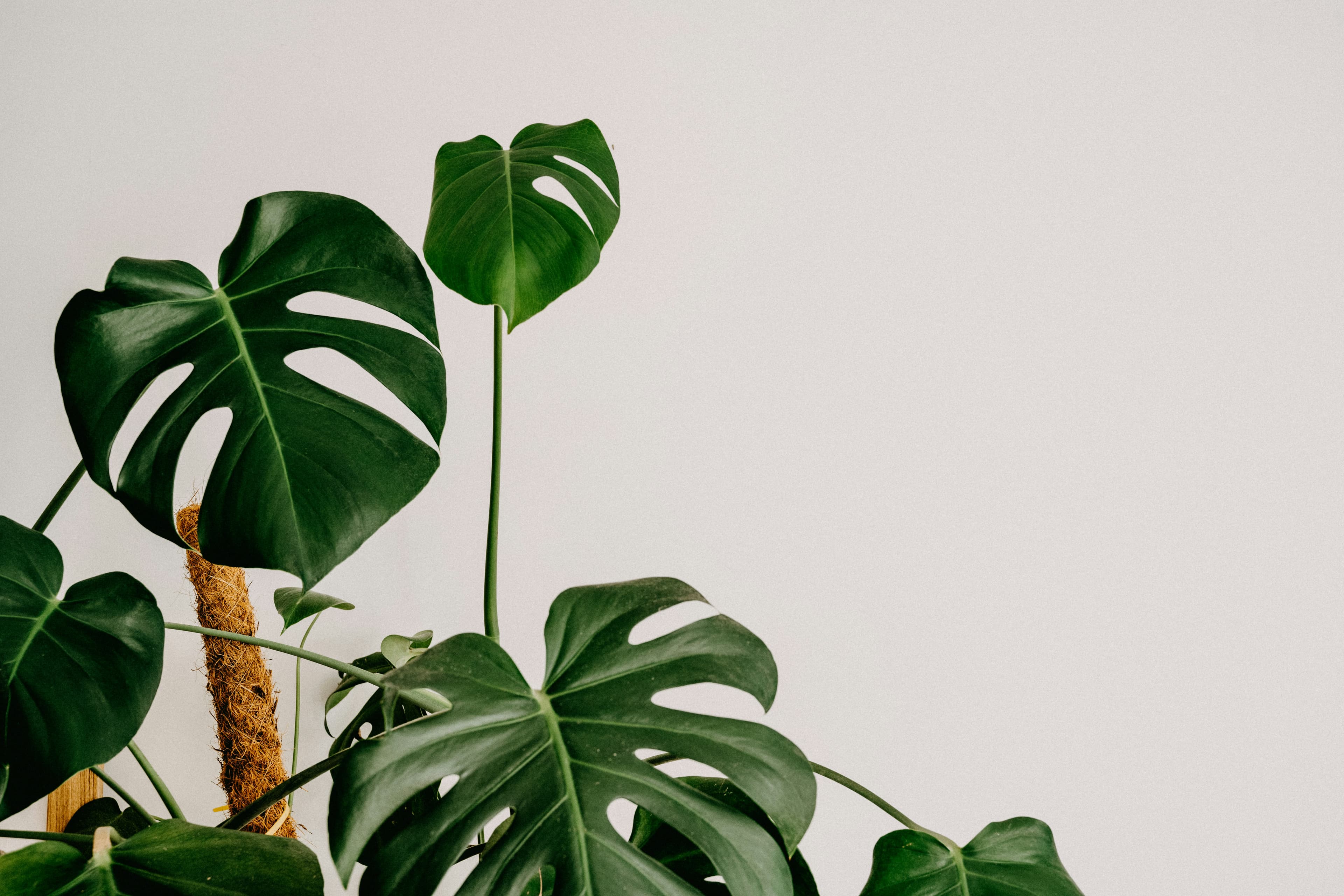
Yellow leaves on a Monstera are one of the most common plant problems — and one of the most misdiagnosed. People see yellow leaves and immediately assume overwatering, when actually there are 7 distinct causes, each with a different fix. Treating for the wrong one wastes time and can make things worse.
Here's how to identify exactly which problem you have.
Quick symptom checker
Bottom leaves yellowing, soil stays wet = overwatering
Yellowing + very dry soil + drooping = underwatering
Pale yellow all over, slow growth = not enough light
Yellow with brown crispy edges = low humidity or draughts
Yellow with green veins (the veins stay green) = nutrient deficiency
Yellow patches + stunted new growth = root bound
One or two old bottom leaves yellowing = natural ageing (normal)
Cause 1 — Overwatering
The most common cause. Monstera roots need to breathe — if the soil stays wet, the roots can't get oxygen, start to rot, and the plant can't absorb water or nutrients. The leaves yellow as a result.
How to confirm it: Stick your finger 5cm into the soil. If it's wet or cool more than 7–10 days after you last watered, you're overwatering. Pull the plant out of its pot and check the roots — dark brown or black mushy roots confirm root rot.
How to fix it:
If roots are healthy (firm and white/tan): simply reduce watering. Water only when the top 5cm of soil is completely dry.
If roots are rotting: remove all dark, mushy roots with sterile scissors. Repot into fresh, well-draining compost mixed with perlite (50/50 works well for Monstera). Don't water for a week after repotting.
Preventing it: Always check the soil before watering. Monstera needs water every 7–10 days in summer and every 14 days in winter. In lower light, stretch this further.
Cause 2 — Underwatering
Less common than overwatering but happens — especially in summer or if the plant is in a very warm room.
How to confirm it: Soil is completely dry and pulling away from the pot edges. Leaves may also feel slightly soft or limp before they yellow.
How to fix it: Water thoroughly — pour slowly until water drains from the bottom. Going forward, check the soil every 5 days in summer rather than watering on a fixed schedule.
Cause 3 — Not enough light
Monstera needs bright indirect light. In darker rooms the plant can't photosynthesise efficiently, the older leaves gradually lose their colour and the plant stops producing the distinctive fenestrations (splits and holes) in new leaves.
How to confirm it: Yellowing is uniform across the whole leaf rather than patchy. New leaves are small and emerge without splits. The plant leans towards the light source.
How to fix it: Move to a brighter spot — within 1–2 metres of a window. Avoid direct summer sun which scorches the leaves. A north-facing room with good ambient light is often fine. South-facing with a sheer curtain is ideal.
Cause 4 — Low humidity or draughts
Monstera originates from tropical rainforest and appreciates 50–60% humidity. UK homes, especially in winter, are often much drier.
How to confirm it: Yellowing is concentrated at leaf edges, often with brown crispy tips. Yellowing appears worse in winter when central heating is running.
How to fix it:
- Move away from radiators and air vents
- Place on a pebble tray with water
- Group with other plants
- Mist leaves 2–3 times per week (though this is less effective than a pebble tray)
- A small humidifier is the most effective solution if humidity is a persistent issue
Cause 5 — Nutrient deficiency
If you haven't fertilised in more than 3 months, or you've had the plant in the same compost for more than 2 years, nutrients may be depleted.
How to confirm it: The distinctive sign is interveinal chlorosis — the leaf turns yellow but the veins stay green. This indicates iron or magnesium deficiency specifically.
How to fix it:
Feed with a balanced liquid fertiliser (NPK ratio around 3:1:2) every 4 weeks from March to September. In winter, stop feeding entirely — the plant is not actively growing and excess nutrients can build up as salts in the soil.
For severe deficiency, a foliar spray (fertiliser diluted and sprayed directly on leaves) can give faster results than root feeding.
Cause 6 — Root bound
If your Monstera has been in the same pot for 2+ years, the roots may have completely filled the pot, leaving no room for fresh compost. The plant can't access water or nutrients efficiently.
How to confirm it: Roots visibly poking out of drainage holes, or circling around the inside of the pot in a solid mass. Growth has slowed noticeably.
How to fix it: Repot into a pot 2–3cm larger in diameter. Don't go too large — a pot much bigger than the root ball holds excess moisture and can cause root rot. Use fresh compost mixed with perlite.
Best time to repot is spring, when the plant is about to enter its active growing period.
Cause 7 — Natural ageing (normal)
A Monstera loses its oldest, lowest leaves as it grows. This is completely normal — the plant redirects energy to newer growth at the top.
How to confirm it: Only 1–2 leaves are affected, always the oldest and lowest on the stem. The rest of the plant looks healthy. No other symptoms.
What to do: Nothing. Let the leaf yellow fully and then remove it cleanly at the stem. This happens a few times a year and is not a sign of a problem.
The one thing that causes the most confusion
Many Monstera problems look identical at first — a yellow leaf is a yellow leaf. The difference is always in the secondary symptoms: soil moisture, root colour, new leaf size, where on the plant the yellowing appears first. Check all of these before deciding what's wrong.
Get an instant diagnosis
Upload a photo of your Monstera to PlantMedic and get a specific diagnosis in seconds — confidence score, likely cause, and step-by-step fix. Free to use, no account needed.